
Direct-to-consumer wine shipping has become an important sales channel for wineries and retailers managing growing customer demand. When evaluating Outsourcing wine shipping vs in-house fulfillment, businesses must consider how each approach affects operations, compliance,e and customer experience.
At some point, nearly every winery faces the same question about whether to manage shipping internally or work with a specialized fulfillment partner. Each option involves different responsibilities, processes, and levels of control over how orders are handled and delivered.
Over the years, we have worked with wineries at every stage,e from small family operations to larger producers managing high order volumes. This guide breaks down the real costs, compliance implications, and operational trade-offs of each model so you can make a confident decision for your winery.
What In-House Wine Order Fulfillment Really Involves
Managing in-house order fulfillment means your team owns every step of the shipping process. That includes receiving and storing inventory, processing orders, printing compliance labels, coordinating carrier pickups, and handling customer inquiries when shipments go wrong.
For some wineries, that level of control is genuinely valuable. You maintain direct oversight of every package that leaves your facility, personally manage customer communication, and build deep institutional knowledge of your shipping operations over time.
But in-house fulfillment demands more than most operators anticipate when they start.
Consider this scenario: A winery with 900 wine club members schedules its spring release. Over a single weekend, the team needs to pick, pack, and process hundreds of orders while verifying compliance labels for multiple states, coordinating carrier schedules, and managing last-minute address corrections. What runs the rest of the year smoothly becomes a staffing crisis in 72 hours.
That scenario plays out in wine operations across the country every release window.
The Real Costs of Managing Wine Shipping In-House
Labor is the visible cost. The hidden ones are what catch most wineries off guard.
Beyond wages, in-house wine shipping carries a cluster of costs that rarely appear in initial planning:
- Compliance software subscriptions for state-by-state permit tracking
- Carrier account management and rate negotiation time
- Peak-season temporary staffing and overtime
- Packaging materials, storage space, and equipment maintenance
- The financial exposure from compliance errors, including fines and potential license risk
Labor typically accounts for 50 to 60 percent of total in-house fulfillment costs, but compliance-related expenses and peak-season overruns frequently add 20 to 30 percent on top of that baseline, according to wine logistics benchmarking data.
Think of it like maintaining your own delivery fleet versus using a carrier network. The fleet feels like it’s in control until you account for insurance, maintenance, and the vehicle sitting idle between runs.
How Outsourced Wine Fulfillment Works – And What It Actually Costs
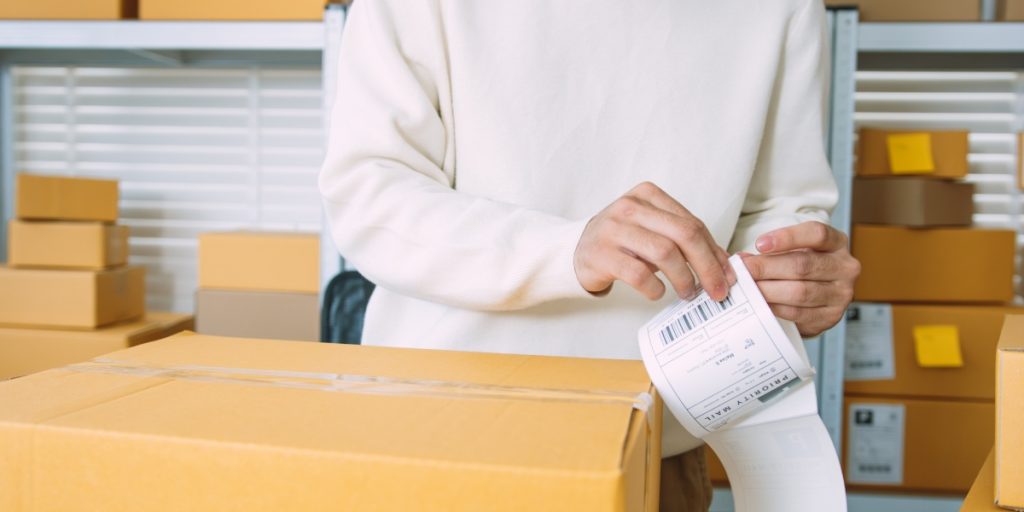
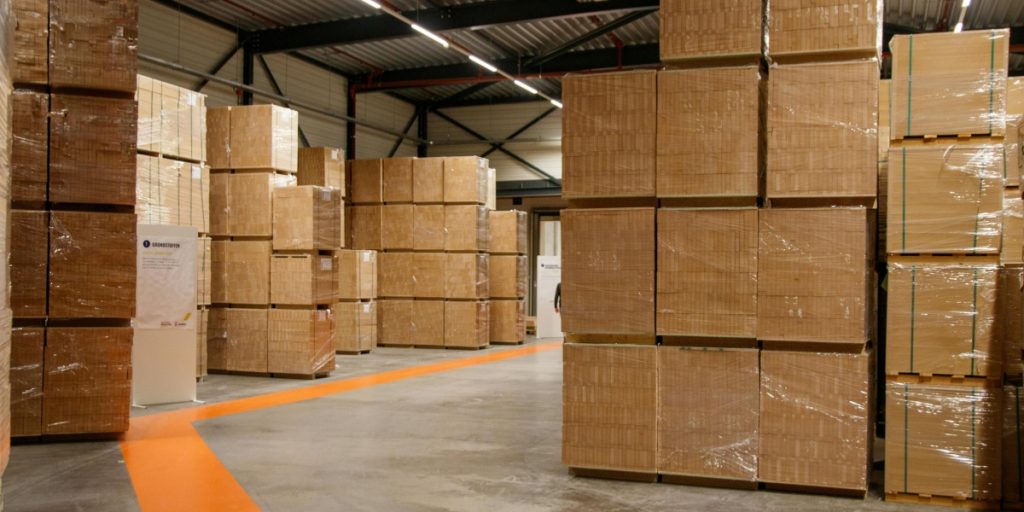
Outsourced wine fulfillment operates through a third-party logistics provider (3PL) that specializes in alcohol shipping. Your inventory lives in their facility. When an order comes in, the 3PL picks, packs, verifies compliance requirements, and ships the order on your behalf.
A qualified wine fulfillment partner manages state DTC permit tracking, carrier compliance requirements, and age verification protocols as part of their core service.
As of 2024, 47 states permit some form of direct-to-consumer wine shipping, each with distinct permit requirements, label regulations, and carrier restrictions, making multi-state compliance one of the most time-intensive aspects of in-house DTC operations.
Managing that compliance web internally is a full-time operational task for growing wineries looking to safely ship wine across multiple states. Outsourcing transfers that burden to a team built specifically to handle it.
On the cost side, outsourced fulfillment shifts your cost structure from fixed overhead to variable, per-order pricing. You pay for what you ship, not for the infrastructure and headcount required to ship it.
Wine-focused 3PLs with established carrier relationships routinely access shipping rates 10 to 30 percent lower than individual wineries can negotiate independently, which partially or fully offsets the per-order service fee at moderate volumes.
Wineries that transition most successfully to outsourced fulfillment invest time upfront, briefing their partner on brand standards, packaging preferences, and customer communication expectations. That alignment work pays dividends in every order that follows.
Outsourced vs. In-House Wine Shipping – A Side-by-Side Comparison
| In-House Fulfillment | Outsourced Fulfillment | |
| Cost Structure | Fixed overhead: labor, space, systems | Variable per-order pricing |
| Compliance Management | Internal team responsibility | Managed by fulfillment partner |
| Scalability | Limited by staffing and space | Scales with order volume |
| Brand Control | Direct oversight | Managed via partner briefing |
| Carrier Access | Standard retail rates | Pre-negotiated partner rates |
| Operational Burden | High — ongoing internal management | Low — handled by specialists |
What most wineries discover when they map out this comparison is that the real trade-off is not control versus cost. It is whether your team’s time and energy are best spent managing logistics or growing your wine business.
When Should Your Winery Consider Outsourcing Wine Shipping?
After working through this decision with many wineries, we have identified four operational signals that consistently indicate in-house fulfillment has reached its ceiling:
- Compliance management is consuming staff time across multiple states
- Seasonal volume spikes are creating staffing crises or shipment delays
- Carrier rate negotiations are generating minimal results for the time invested
- Fulfillment errors are producing customer service issues that affect your brand reputation
Wine logistics research consistently identifies 200 or more monthly DTC orders as the threshold where outsourced fulfillment typically becomes cost-competitive with in-house operations, though this varies based on geography, service level, and volume consistency.
That said, in-house fulfillment remains the right choice for certain operations. If your shipping volume is low and predictable, your team has dedicated fulfillment capacity, and you ship primarily to a small number of permitted states, the transition cost of outsourcing may not be justified.
Is your fulfillment operation growing more complex faster than your team can adapt? That question usually reveals the answer more clearly than any cost model.
A third path also exists. Some wineries run a hybrid model successfully, managing high-touch or local shipments internally while outsourcing standard DTC volume to a fulfillment partner. It is worth evaluating whether a partial outsourcing arrangement fits your operation before committing to either model fully.
The Fulfillment Model That Moves Your Winery Forward
Comparing outsourced vs in-house wine shipping is not about choosing control over convenience. It is about finding the model that aligns with your order volume, compliance demands, and operational capacity. Both approaches can work, but the right choice depends on how your winery runs today and where it is headed.
The key is evaluating your fulfillment strategy before operational strain forces the decision. From compliance management to staffing demands and shipping costs, small inefficiencies can scale quickly and impact both your margins and your customer experience.
Need help simplifying your wine shipping and fulfillment process?
Contact All American Mail Center to explore reliable shipping and logistics solutions tailored to your business. We help you streamline operations, manage deliveries efficiently, and scale your fulfillment with confidence.
Frequently Asked Questions About Wine Shipping Fulfillment
Can small wineries afford to outsource wine shipping?
Many small wineries assume outsourcing is only viable at high volumes, but that is not always accurate. The cost comparison depends heavily on your current compliance burden, carrier rates, and staff capacity. We recommend running a side-by-side cost analysis before concluding that in-house is the more affordable option.
- RELATED: Napa’s Top Wine Shippers Compared
Who handles compliance when I use an outsourced wine fulfillment partner?
Your fulfillment partner manages the operational compliance tasks, permit verification, label accuracy, carrier requirements, and age verification protocols. Your winery retains legal responsibility for your DTC licenses. Outsourcing reduces your compliance burden, but it does not transfer your regulatory accountability.
Will outsourcing affect my customer experience and brand?
In our experience, customers rarely notice the difference when a fulfillment partner is properly briefed on your brand standards. Packaging consistency, tracking communication, and delivery speed are all manageable through a well-structured partner relationship, and in many cases, 3PL partners improve delivery speed through carrier network access that individual wineries cannot replicate alone.
How does fulfillment impact recurring customer orders?
Reliable fulfillment plays a major role in customer satisfaction by ensuring orders arrive accurately and on time. A well-managed wine club shipping program helps maintain consistent packaging, delivery schedules, compliance, and communication, creating a better experience for members and encouraging long-term retention.