
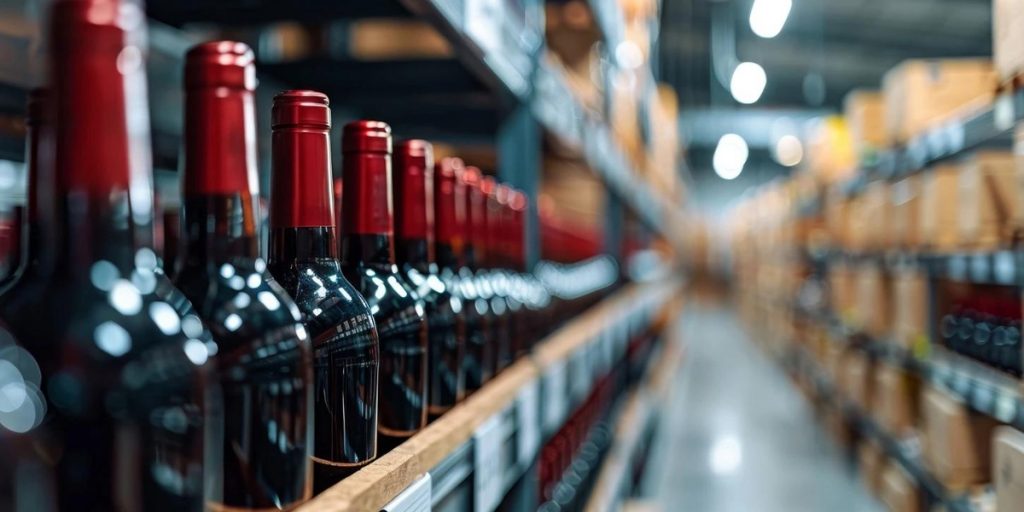
Understanding how we protect wine bottles during shipping begins with recognizing the challenges of safely transporting glass containers. Wine shipments move through multiple handling and transportation stages before reaching their final destination.
Protecting wine bottles during transit requires more than external labels or basic packaging materials. Effective shipping practices rely on specialized packaging methods designed to reduce movement, absorb impact, and help maintain product integrity.
This guide explains the systems and packaging strategies used to safeguard wine bottles throughout the shipping process. It also outlines the key factors that contribute to secure transportation from shipment preparation to final delivery.
What Really Happens to Wine Bottles During Shipping
Most people picture a wine bottle sitting quietly in a box as it travels from one address to another. The reality is considerably less gentle.
From the moment a package leaves our facility, it enters a world built for speed, not fragility. Sorting facilities process thousands of packages per hour, and conveyor drops, stacking pressure, and lateral impact are standard conditions. Bottles shipped without purpose-built packaging may arrive damaged, especially on routes with multiple carrier handoffs.
Three categories of risk appear in every shipment:
- Mechanical impact – drops, compression, and lateral force from handling
- Vibration stress – sustained road movement that stresses bottle structure and wine chemistry
- Temperature exposure – heat, cold, and rapid swings that compromise wine quality and seal integrity
Consider this scenario: A wine collector ships six bottles of aged red wine cross-country in a standard box marked “Fragile.” Two arrive broken from contact with each other, and two more show heat damage from a warehouse delay. The label did nothing – because labels do not absorb shock, isolate bottles, or regulate temperature.
The Hidden Risks Most Shippers Never Mention
Impact gets the most attention in wine shipping protection. Two quieter risks cause just as much damage and receive far less conversation.
Vibration Fatigue
Occurs when a bottle experiences sustained, repetitive movement across a long road haul. Prolonged vibration during transit can affect a wine’s chemical profile within a few days of sustained exposure, particularly for aged bottles with delicate sediment.
Thermal Shock
It is the other underappreciated threat. Wine quality begins to degrade when bottles are exposed to temperatures above 75 degrees Fahrenheit for extended periods. Above 80 degrees, damage can accelerate within hours – a threshold easily reached inside a staging warehouse on a summer afternoon.
Connected to heat is cork push, where warmth forces the cork partially out of the bottle and breaks the seal – damage that is invisible at delivery and only reveals itself in the glass.
How We Protect Wine Bottles During Shipping
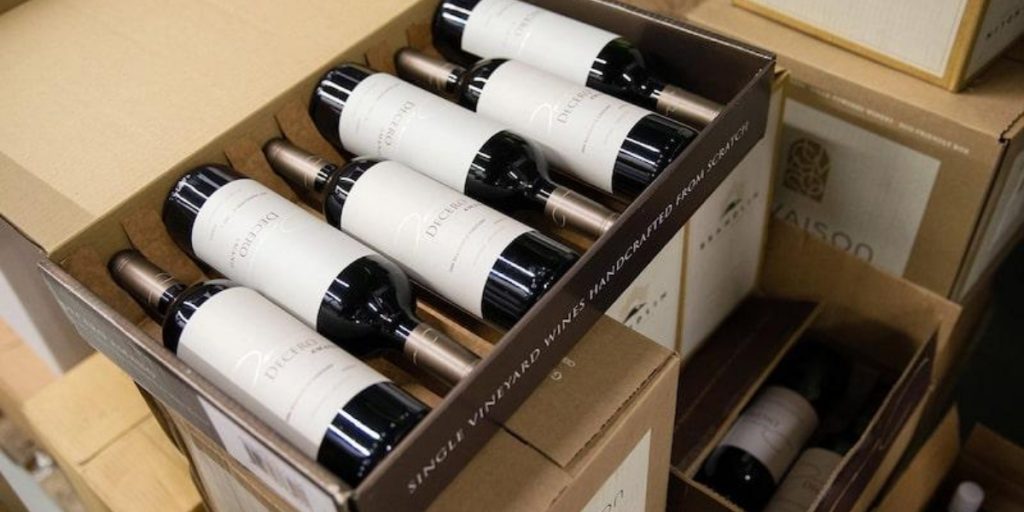
Understanding the risks only matters if you have a system designed to address each one. That is where generic shipping approaches fall short – they treat wine like standard freight, when wine requires something purpose-built.
Our wine shipping protection approach is built in deliberate layers, with each layer targeting a specific risk. Here is what goes into every shipment.
The Right Box Makes Everything Else Work
Think of the outer box as the foundation on which the entire protection system depends. Without it holding firm, nothing inside it matters.
Wine-specific corrugated boxes are engineered with higher wall strength ratings to resist compression under stacking loads. They are sized to minimize internal movement and built to work with the cushioning systems inside them. We hold our materials to performance testing standards established by the International Safe Transit Association (ISTA) – a benchmark that standard parcel boxes do not consistently meet.
A box that buckles under other packages in a delivery vehicle makes every internal layer irrelevant. The structural foundation has to hold before anything else can do its job.
Isolation and Impact Absorption – The Two Jobs Every Shipper Must Do
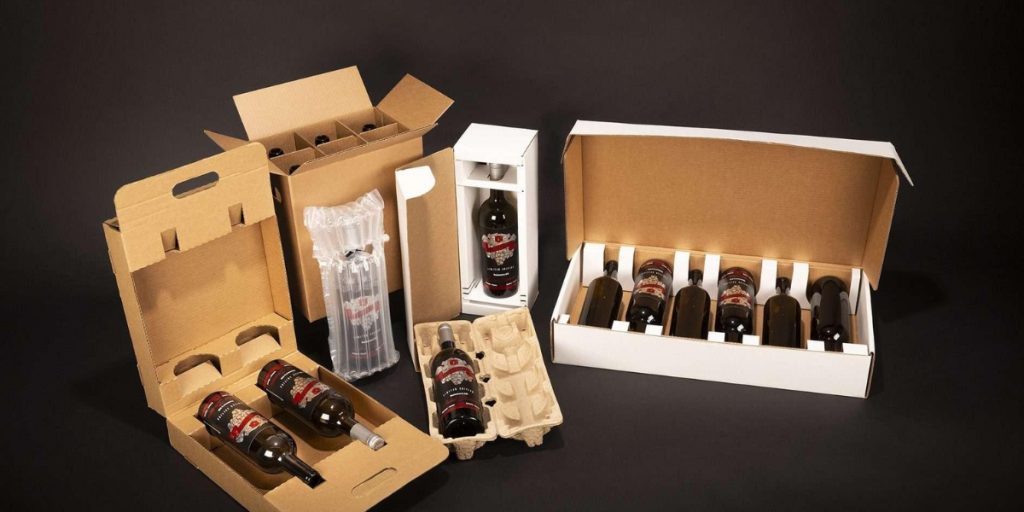
Here is something that surprises most people: bottle-to-bottle contact is a leading cause of preventable breakage during wine transit.
Cell divider systems solve this by creating individual compartments for every bottle – think of it as giving each bottle its own protected lane; regardless of what the outer box experiences, the bottles never touch. Each cell absorbs lateral forces, prevents the transfer of vibration, and eliminates the domino effect of one bottle shifting and striking its neighbor.
Beyond isolation, cushioning layers at the base, top, and sides absorb impact energy before it reaches the glass. Molded pulp and foam inserts both perform this role – foam offers stronger impact absorption while pulp carries environmental advantages. We choose based on route length, bottle weight, and the level of wine bottle protection each shipment requires.
Temperature Defense – The Risk You Cannot See at the Door.
Is the wine in that perfectly sealed, unbroken box actually the same wine that was packed? If temperature protection was not part of the plan, there is a real chance it is not.
Insulated wine shippers use thermal liners or panels with sufficient thermal mass to buffer the interior against external temperature swings. Transit dwell time – the total hours a package spends in staging areas and vehicles – determines how hard that insulation has to work.
On a two-day route through moderate conditions, a quality liner performs reliably. On a four-day summer route through high-heat regions, the demands increase significantly. We will be direct: insulation has a performance window, which is why route selection and shipping timing are part of our protection system – not afterthoughts.
What to Look for in a Wine Shipping Partner
The right questions reveal quickly whether a shipping partner has a real system or just confident marketing. Ask these before you commit:
- Does the packaging use wine-specific boxes with cell dividers, or adapted general freight boxes?
- Is thermal protection included, and what is the rated performance window for the insulated liner?
- How does carrier selection account for route length and seasonal temperature exposure?
- What is the process if a bottle arrives damaged, and who carries responsibility?
A partner with a real system will answer each question with specifics. Vague references to “careful handling” are not a protection system. They are a sticker with better marketing.
Ship With Confidence, Not Just a Sticker
Shipping wine safely requires more than placing bottles in a box labeled “Fragile.” Wine shipments move through sorting facilities, conveyor systems, delivery vehicles, and changing temperature conditions before reaching their final destination. Without proper packaging systems in place, bottles remain vulnerable to impact damage, vibration stress, compression, and heat exposure throughout transit.
Effective wine bottle protection depends on multiple layers working together. Wine-specific corrugated boxes, individual cell dividers, impact-absorbing cushioning, and insulated packaging materials all help reduce bottle movement and maintain product integrity during transportation. Temperature protection also plays a major role, particularly during long-distance shipping or warmer seasonal conditions that can affect cork seals and wine quality.
Many wine collectors, wineries, and gift senders underestimate how quickly transit conditions can compromise a shipment if the packaging is not specifically engineered for wine transportation. Proper packaging systems help reduce the risk of breakage while preserving the quality, presentation, and condition of every shipment.
Need help shipping wine safely and securely?
Contact All American Mail Center for professional wine shipping services, insulated wine packaging solutions, bottle protection systems, temperature-controlled shipping preparation, and secure wine transportation support designed to help shipments arrive safely while protecting wine quality throughout transit.
Frequently Asked Questions
How Do You Protect Wine Bottles During Shipping?
Wine bottles are typically protected using wine-specific corrugated boxes, individual cell dividers, impact-absorbing cushioning, and insulated packaging materials. These systems help reduce bottle movement, absorb vibration, and minimize the risk of breakage or temperature-related damage during transit.
Can Temperature Changes Damage Wine During Transit?
Yes. Extended exposure to high heat or rapid temperature swings can affect wine quality, compromise cork seals, and increase the risk of spoilage. Many professional wine shipping services use insulated packaging and route-planning strategies to reduce temperature exposure during transportation.
Are “Fragile” Stickers Enough to Protect Wine Shipments?
No. Fragile labels alone do not prevent damage from impact, compression, or vibration. Proper wine bottle protection depends on secure internal packaging systems that isolate each bottle and absorb shock during handling and transportation.